
Most Commander decks should start at 10 to 14 removal spells
If you are asking how much removal should you play in commander, start with 8 to 10 spot removal spells and 2 to 4 board wipes, then adjust for your commander, speed, and pod. Low-curve proactive decks can trim slightly, but slower battlecruiser and value decks usually need the full package.
Baseline removal targets
The practical baseline: 10 to 14 removal cards
Commander decks need more removal than many players first expect because one deck has to answer three opponents. In a four-player game, someone will assemble a value engine, a lethal commander, a protected combo piece, or an artifact that changes the table. If your list has only four or five answers, you are not choosing when to interact. You are hoping the table handles everything for you.
A strong default is 10 to 14 total removal cards. That number includes single-target answers, flexible interaction, and sweepers. It does not include cards that only slow combat without removing anything, and it usually should not include narrow hate cards unless your local pod consistently rewards them. If you want a quick sanity check, run the list through the Commander Interaction Checker after you decide which cards count as real answers.
The usual split is 8 to 10 spot removal spells plus 2 to 4 board wipes. The spot removal keeps one player from snowballing early, while the wipes reset boards that outgrow one-for-one answers. This split is more useful than a single total number because a deck with twelve board wipes and no cheap instant-speed answers will still lose to one protected threat, while a deck with twelve spot removal spells may never catch up after a token deck floods the battlefield.
Benchmark removal cards and what they teach

Swords to Plowshares
Cheap creature answer
The gold-standard example of why one-mana interaction matters. It trades up on mana and can stop a commander before it attacks or enables a combo.

Path to Exile
Cheap creature answer
Another low-cost answer that is at its best when the creature matters more than the extra land.

Beast Within
Flexible permanent answer
A practical example of removal that covers creatures, planeswalkers, lands, artifacts, enchantments, and problem permanents outside your main color strengths.

Generous Gift
Flexible permanent answer
The white equivalent style of catch-all interaction. The token drawback is usually worth the coverage.

Chaos Warp
Red catch-all answer
Important because red decks need ways to handle enchantments and other permanents they otherwise struggle to remove cleanly.
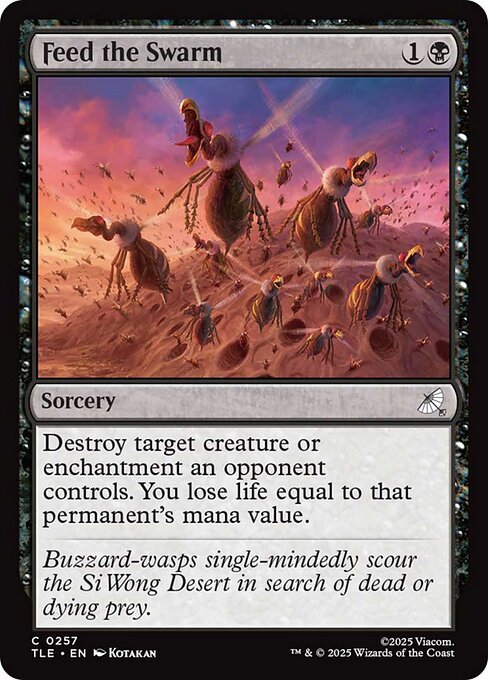
Feed the Swarm
Black enchantment answer
A key example of covering a color weakness. Black decks often need at least one way to remove enchantments.
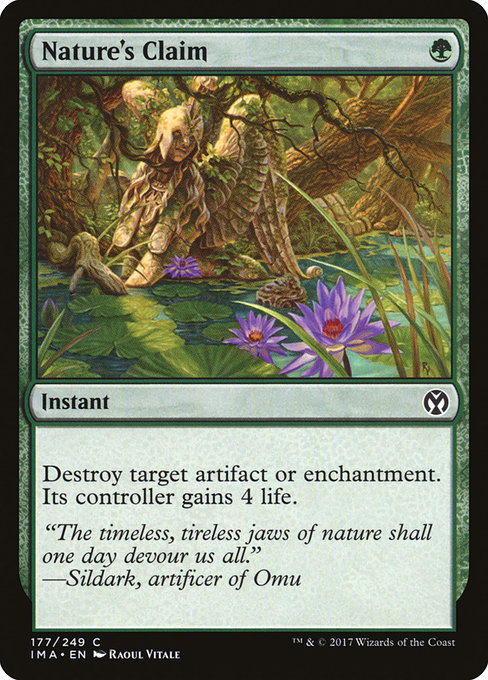
Nature's Claim
Efficient artifact or enchantment removal
The life gain is rarely relevant compared with stopping a mana engine, protection piece, or combo artifact.

Vandalblast
Artifact sweeper
A reminder that some removal is both early spot interaction and late-game table correction.

Blasphemous Act
Creature board wipe
A common red sweeper because it often costs one mana in multiplayer and resets creature-heavy boards.
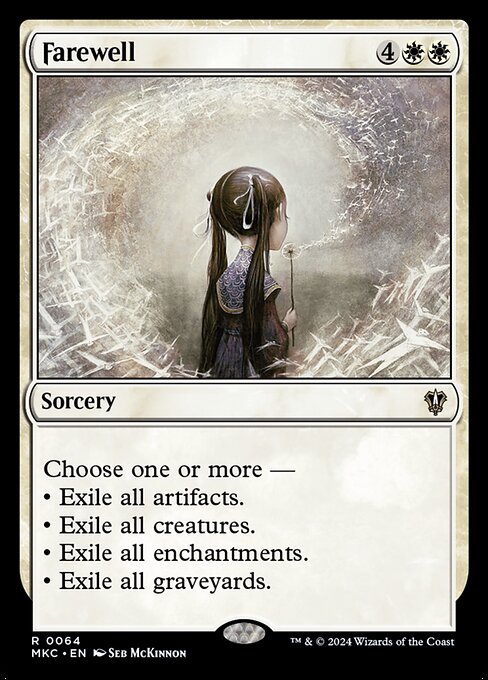
Farewell
Reset button
A high-cost but high-coverage wipe that can clear creatures, artifacts, enchantments, and graveyards when the table has gone too wide.

Toxic Deluge
Efficient creature wipe
A low-mana sweeper that scales to the board and is especially strong when you need to wipe before turn five.
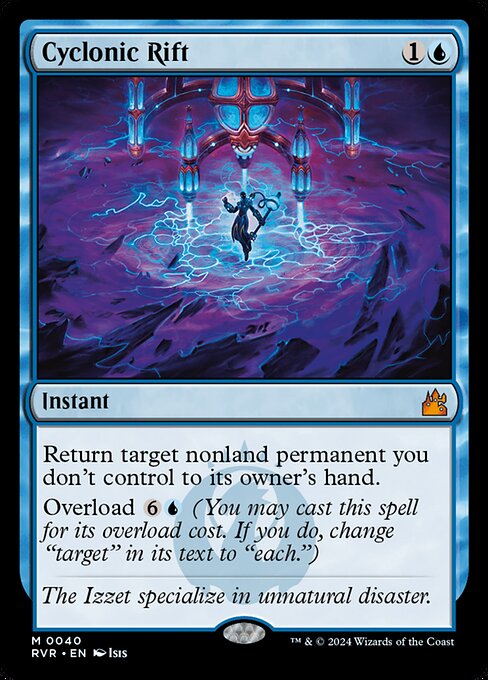
Cyclonic Rift
Asymmetric reset
A powerful example of a spell that functions as spot interaction early and a game-swinging reset later.
Do not count all interaction the same way
The biggest mistake is treating every answer as interchangeable. A two-mana instant that removes a commander before combat and a six-mana sorcery that wipes the board are both removal, but they solve different problems. Your deck needs a mix of timing, targets, and mana costs. When you count removal, tag each card by what it actually answers: creatures, artifacts, enchantments, graveyards, lands, planeswalkers, commanders, token boards, or combo permanents.
For most casual and mid-power Commander decks, the first five removal slots should be cheap and reliable. If all your answers cost four or more, you will often spend your whole turn removing one threat while the other two opponents develop. Cheap removal is not just for high-power pods. It lets you cast a ramp spell, hold up an answer, and avoid falling behind on tempo.
Recommended removal mix by deck style
| Deck style | Spot removal | Board wipes | What to prioritize |
|---|---|---|---|
| Creature-heavy combat deck | 7 to 9 | 2 to 3 | Cheap answers that do not kill your own board, plus selective wipes |
| Spellslinger or control deck | 9 to 12 | 3 to 5 | Instant-speed answers, sweepers, and flexible permanent removal |
| Aristocrats or sacrifice deck | 8 to 10 | 3 to 4 | Edicts, wipes you can break parity on, and enchantment answers |
| Artifact or enchantment engine deck | 7 to 9 | 2 to 3 | Protection plus answers to opposing hate pieces |
| Fast combo deck | 5 to 8 | 0 to 2 | Cheap protection and interaction that clears a path |
| Battlecruiser value deck | 10 to 12 | 3 to 4 | Catch-all removal and board resets to survive to late turns |
Spot removal: aim for 8 to 10, with at least five cheap plays
Spot removal is the interaction you rely on before the board is completely out of hand. In Commander, the best spot removal either costs very little mana or hits a wide range of permanent types. The reason is simple: you rarely get full value from spending your entire turn answering one card. If an opponent casts a must-kill commander on turn four, you want to answer it while still progressing your own plan.
In white, Swords to Plowshares and Path to Exile show the value of one-mana answers. In green and white, Beast Within and Generous Gift show the value of flexible coverage. In red, Chaos Warp matters because it can handle card types red otherwise struggles against. In black, Feed the Swarm gives decks a real way to answer enchantments. In green, Nature's Claim is efficient enough that the life gain is usually not a meaningful drawback.
A good spot removal suite should not be all creature kill. Many Commander losses come from noncreature permanents: mana-doubling enchantments, artifact engines, protection pieces, graveyard engines, and planeswalkers that generate repeated value. If your deck only removes creatures, it may look interactive in a decklist but feel helpless at the table.
Board wipes: play 2 to 4, not zero by default
Board wipes are the catch-up mechanism that stops one opponent from converting an early lead into an automatic win. Most decks should start with 2 to 4 board wipes. Two is the minimum for many proactive decks that expect to be ahead on board. Three is the comfortable default. Four or more belongs in slower control, pillow-fort, superfriends, or value decks that can rebuild better than the table.
The correct board wipe depends on what your deck can survive. Blasphemous Act is excellent when you need an efficient creature reset. Toxic Deluge is strong because it can come down early and handle indestructible poorly only if toughness reduction is enough. Farewell is expensive, but it solves clogged battlefields and graveyard problems at the same time. Cyclonic Rift is different because it does not destroy anything, but the overloaded mode can create a decisive tempo swing.
Do not add wipes only because you feel behind in games. Ask why you are behind. If you are losing before turn five, your issue may be cheap interaction or mulligan decisions rather than a lack of six-mana sweepers. If you are losing after the table develops ten or more permanents, you probably need better sweepers or more ways to break parity after casting them. The Mulligan Calculator and Commander Mana Curve Calculator can help separate those problems.
Adjust the number for speed, commander dependence, and power bracket
The 10 to 14 number is a starting point, not a law. A low-to-the-ground aggressive deck that pressures life totals early may play closer to 9 or 10 total removal cards because its creatures force opponents to react. A slower deck that plans to win on turn ten or later should often play 13 to 16 because it gives opponents more draw steps to find must-answer threats.
Commander-dependent decks also need to think differently. If your commander must stay on the battlefield for the deck to function, some slots that look like removal may need to become protection. That does not mean you can ignore opposing threats. It means your interaction suite should include flexible cards that keep you alive while also protecting your main engine when possible.
Power bracket matters too. At lower-power tables, more games are decided by board presence, expensive permanents, and combat. Board wipes and broad answers gain value. At higher-power tables, the important window may be much earlier, so cheap interaction becomes more important than expensive haymakers. If your deck is trying to sit in a specific table range, check it against the Bracket Calculator and then tune removal to match the speed of that bracket.
Color identity changes what removal should look like
Color identity should shape your answer package, but it should not excuse obvious gaps. White is excellent at efficient creature removal and broad wipes. Black is strong against creatures but must work harder to answer enchantments. Green handles artifacts and enchantments well but often needs help with creatures. Red is good at artifacts and damage-based removal, but it values catch-all effects highly. Blue often interacts through bounce and counters rather than permanent destruction.
Multicolor decks should use their colors to cover weaknesses. A black-green deck should not rely only on creature kill when green gives it access to artifact and enchantment removal. A red-white deck can mix efficient creature answers with artifact wipes and catch-all effects. A mono-black deck should consciously reserve space for enchantment answers or colorless solutions because otherwise a single enchantment can dominate a game.
- If your colors can remove artifacts and enchantments efficiently, play at least three cards that do so.
- If your colors struggle with a permanent type, include flexible catch-all answers even when they look less efficient.
- If your deck wins through creatures, prefer wipes that spare your board, scale asymmetrically, or can be timed after attacks.
- If your deck wins through noncreature engines, prioritize creature wipes and cheap answers to hate permanents.
- If your pod has many graveyard decks, count graveyard interaction separately instead of pretending ordinary removal covers it.
Common removal mistakes in Commander
The first common mistake is counting synergy cards as removal when they only work in ideal conditions. A fight spell in a deck with few large creatures is not a reliable answer. A damage spell that kills small creatures but never handles a huge commander may not deserve a full removal slot. Conditional cards are fine, but your count should reflect how often they answer the threats you actually face.
The second mistake is overloading on sorcery-speed answers. Sorcery-speed removal is playable, especially when it is efficient or flexible, but Commander rewards holding up interaction. Instant-speed removal lets you wait until a threat is pointed at you, until an opponent spends resources protecting it, or until a combo attempt begins. If every answer has to be cast on your main phase, you give up too much information.
The third mistake is cutting removal for more engine pieces after every goldfish test. Goldfishing makes removal look bad because there are no opponents. Real Commander games punish that. If your deck feels smooth alone but folds when one permanent stops your plan, the answer is not more synergy. It is a better interaction package. Use the Commander Deck Building Checklist when making final cuts so removal does not disappear during the last ten slots.
A simple tuning process after your first games
After three to five games, review every removal spell you drew. Did it have a legal target when you needed one? Was it too expensive to cast while developing? Did it answer the permanent type that actually beat you? Did you hold it too long because it was your only answer? These questions are more useful than asking whether the card is generally powerful.
If you often die with removal in hand, lower the mana value or improve your timing. If you never draw interaction, add two more pieces before changing anything else. If you answer one threat and lose to the next two, add a wipe or a two-for-one answer. If you always wipe your own board and cannot rebuild, choose more selective removal or add card draw before adding another sweeper.
Audit your removal package
Import your deck, count real interaction, and find whether your answers are too narrow, too slow, or missing key permanent types.
Final recommendation
For most Commander decks, play 10 to 14 removal cards: 8 to 10 spot removal spells and 2 to 4 board wipes. Make at least five of those answers cost less than three mana, and make sure you can interact with more than creatures. From there, tune for your deck's speed, your commander, your color identity, and the threats that actually show up in your pod.
The goal is not to answer everything. The goal is to have enough removal that you can stop the first permanent that will beat you, survive the board state that gets out of control, and still execute your own plan. That is the difference between a deck that goldfishes well and a deck that plays real Commander.
FAQ
How much removal should you play in Commander?
Most Commander decks should start with 10 to 14 total removal cards. A practical split is 8 to 10 spot removal spells and 2 to 4 board wipes, then adjust based on speed, colors, commander dependence, and your local pod.
How many board wipes should an EDH deck run?
Most decks want 2 to 4 board wipes. Proactive creature decks can start at 2, average midrange decks often want 3, and slower control or value decks may want 4 or more if they can rebuild well.
Does counterspell interaction count as removal?
It can count as interaction, but it is not the same as removal already on the battlefield. If your deck relies on counters, still make sure you have ways to answer resolved permanents, especially artifacts, enchantments, and commanders.
Should fast combo decks play less removal?
Usually yes, but not zero. Fast combo decks often play fewer board wipes and more cheap protection or efficient interaction. They still need enough answers to clear hate pieces and survive early pressure.
Can creature-based removal count toward my removal total?
Yes, if it reliably answers opposing threats. Creatures that destroy artifacts, enchantments, or creatures can count, but be honest about speed and timing. A five-mana creature with a narrow trigger is not the same as cheap instant-speed removal.
What if my playgroup says I play too much removal?
Check whether your deck is preventing games from happening or simply answering must-answer threats. Ten to fourteen removal cards is normal for Commander. If games feel hostile, discuss power level, threat density, and expectations rather than cutting all interaction.