
Bracket 2 vs Bracket 3 changes the Game Changer allowance first
The official difference is not just vibe or speed. Bracket 2 is a Core Commander experience and should not include Game Changers. Bracket 3 is an Upgraded experience that may include a small number of Game Changers, commonly up to three under the current framework, while still avoiding cEDH-level optimization.
Bracket 2 vs Bracket 3 at a glance
What actually changes between Bracket 2 and Bracket 3?
The official Commander Brackets framework separates decks by expected experience and by the presence of Game Changers. For the specific question "commander bracket 2 vs bracket 3 what actually changes," the cleanest answer is: Bracket 2 is the normal Core Commander lane with no Game Changers, while Bracket 3 is the Upgraded lane where a deck can use a limited number of Game Changers.
That matters because Game Changers are not simply strong cards. They are cards identified by the format stewards as especially likely to alter casual Commander games through speed, consistency, resource imbalance, or endgame compression. A Bracket 2 deck can still be upgraded and coherent, but it should not rely on those flagged cards. A Bracket 3 deck can include them, but the expectation is still social Commander, not cEDH.
Practical signals like faster development, better tutors, tighter mana, and denser interaction still help describe the play experience. They are not the official definition by themselves. If you say your deck is Bracket 2 but it contains Smothering Tithe, Rhystic Study, or Demonic Tutor, the issue is not just that the deck feels tuned. Those are Game Changer-style bracket flags.
Cards that often appear in bracket conversations

Sol Ring
Legal staple, not the key 2-to-3 divider
Common across Commander. It is a power signal in context, but it is not the same kind of Bracket 2 vs 3 marker as a Game Changer.

Arcane Signet
Normal fixing and ramp
A normal inclusion in many decks. It smooths mana but usually does not define a bracket by itself.
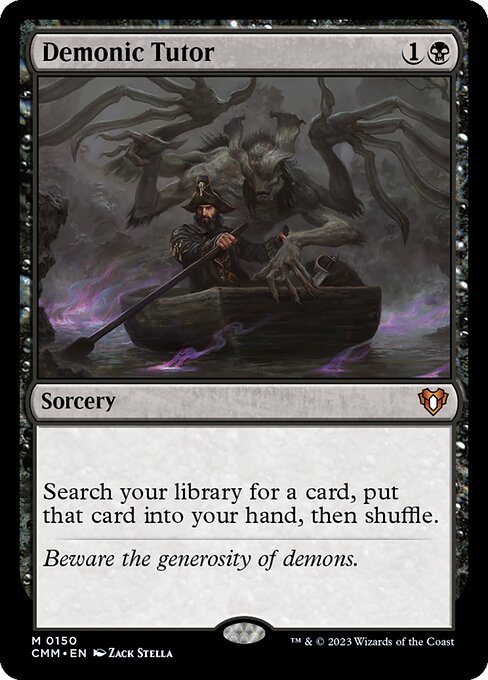
Demonic Tutor
Game Changer consistency card
A major Bracket 3 signal because it turns one slot into the best card for the current game state at only two mana.
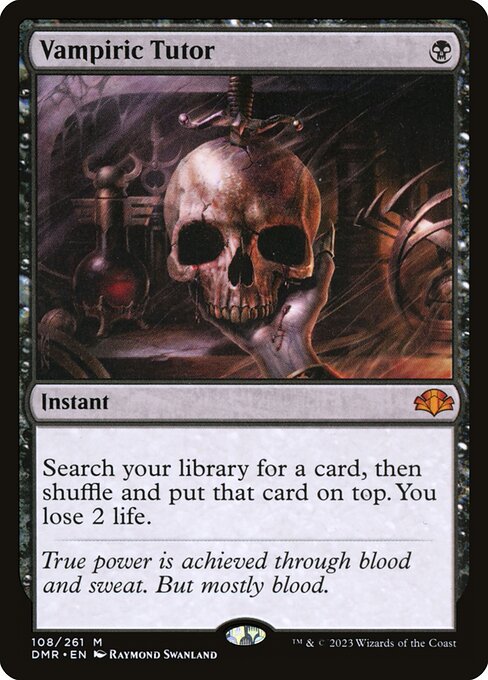
Vampiric Tutor
Game Changer premium tutor
A strong Bracket 3-or-higher flag when it repeatedly finds combo pieces, engines, protection, or the best answer.
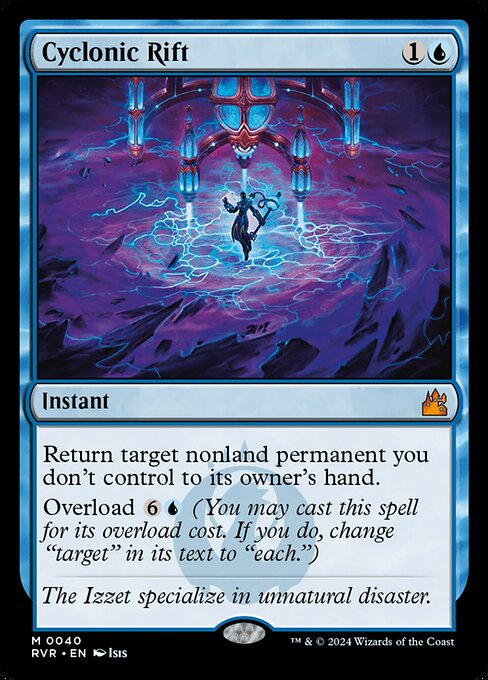
Cyclonic Rift
Game Changer endgame compression
Overload can convert parity into a win by removing blockers, answers, and opposing engines at instant speed.
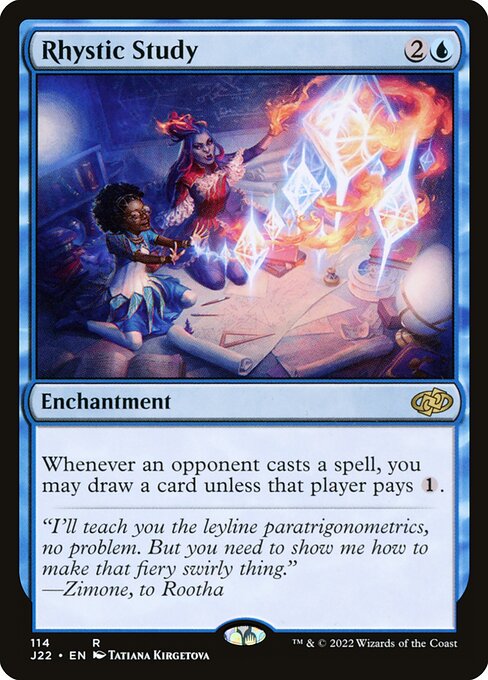
Rhystic Study
Game Changer resource engine
Snowballs early card advantage and asks the whole table to pay mana or let one player pull far ahead.
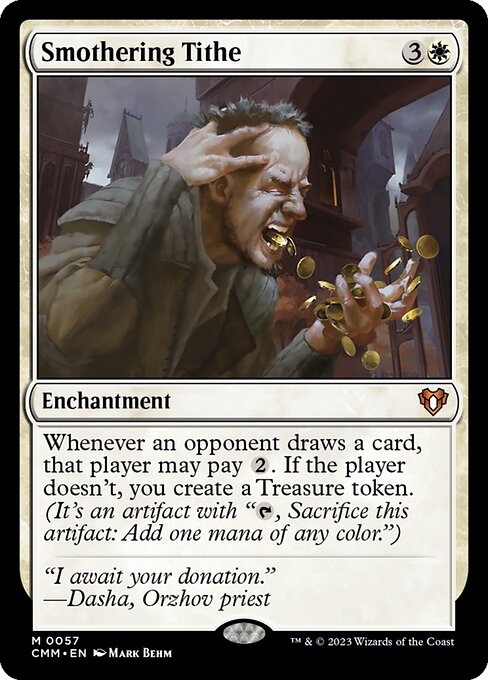
Smothering Tithe
Game Changer mana engine
The hero card here is bracket-relevant because it is a Game Changer that can create explosive multiplayer mana.
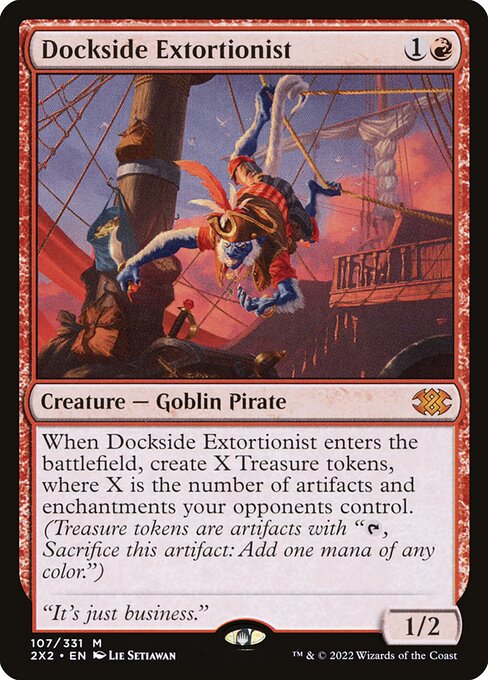
Dockside Extortionist
Banned in Commander
Do not use Dockside as a legal Bracket 3 upgrade example. Banned cards are not legal in any bracket.
Bracket 2 decks: Core Commander with no Game Changers
Bracket 2 is not untouched-precon-only Commander. A Bracket 2 deck can have a real plan, upgraded lands, enough ramp, clean removal, and cards chosen because they support the commander. The official line to watch is that it should avoid Game Changers. That keeps the game closer to a normal social Commander experience where engines develop, threats are visible, and opponents are not expected to answer premium snowball cards immediately.
A Bracket 2 Winota combat list, for example, might use efficient creatures, anthem effects, and protection like Selfless Spirit, but skip universally flagged engines and tutors. A Muldrotha graveyard list might run Satyr Wayfinder, Eternal Witness, and casual recursion loops, but avoid Vampiric Tutor and other premium consistency tools. A spells deck might play big draw spells and magecraft payoffs, but not Rhystic Study as its early snowball engine.
- No Game Changers under the current bracket framework.
- Theme and commander identity still matter more than maximum efficiency.
- Win conditions are usually visible and interactable: combat, big spells, board engines, or slower combos.
- Tutors, if present, should be slower, narrower, or thematic rather than premium catch-all consistency pieces.
- The deck can be strong, but it should not require Bracket 3 answers just to keep the game normal.
Bracket 3 decks: Upgraded Commander with limited Game Changers
Bracket 3 is where Game Changers enter the conversation. A Bracket 3 deck may include a limited number of them, but that does not mean every tuned staple belongs in every list or that the deck is trying to play cEDH. The point is that the table should expect stronger resource engines, cleaner consistency, and cards that can swing a multiplayer game much harder than normal upgraded pieces.
This is also where subjective power signals become useful. A Bracket 3 deck often trims slow cards, lowers its curve, adds more purposeful interaction, and chooses upgrades that make its best plan happen more often. Those are play-experience diagnostics, not replacements for the official bracket criteria. The official check is Game Changers first; the table conversation comes next.
For example, adding Smothering Tithe to a white token deck is not just a random ramp upgrade. It changes the deck's ceiling because one enchantment can fund multiple spells per turn, commander recasts, and a fast closing board. Adding Cyclonic Rift to a blue combat deck changes endgames because one overloaded spell can clear the way for lethal damage.
Official criteria vs practical power signals
| Deck feature | Bracket 2 pattern | Bracket 3 pattern |
|---|---|---|
| Official Game Changers | None | Limited number allowed |
| Examples | Arcane Signet, theme ramp, normal removal | Smothering Tithe, Rhystic Study, Cyclonic Rift, Demonic Tutor, Vampiric Tutor |
| Speed | Often develops before threatening | Often turns a setup advantage into pressure earlier |
| Tutors | Few, narrow, expensive, or thematic | Efficient tutors may be included as Game Changers |
| Interaction | Enough removal to participate | More deliberate answers and protection for key turns |
| Win conditions | Board-based and visible | More redundant, compact, or protected |
| Table expectation | Core casual game | Upgraded casual game with stronger answers expected |
The upgrade decisions that push a deck from Bracket 2 to Bracket 3
The cleanest Bracket 2-to-3 move is adding one to three Game Changers that directly support the deck's plan. The important part is role fit. Do not think of this as "replace Arcane Signet with Demonic Tutor." Those cards do different jobs. Think in actual swaps: a slow tutor becomes Demonic Tutor, a six-mana draw spell becomes Rhystic Study, or a fair mana doubler becomes Smothering Tithe.
Case study one: a Bracket 2 combat deck might win with creature density, Overrun effects, and protection. To become Bracket 3, it could cut Return of the Wildspeaker for Rhystic Study in Simic, add Cyclonic Rift as the closing interaction spell, and replace a clunky five-mana tutor with Demonic Tutor in black. The play pattern changes from "build a board and hope it survives" to "draw more, find the best finisher, and clear the table at the right moment."
Case study two: a graveyard deck might move from Bracket 2 to Bracket 3 by replacing Final Parting with Vampiric Tutor, upgrading a slow value enchantment into Rhystic Study if it is in blue, and adding more one-mana graveyard setup plus protection. Case study three: a spells deck could swap a six-mana draw spell for Rhystic Study, add Demonic Tutor to find its engine or answer, and include Cyclonic Rift as a reset that protects a winning turn.
Real role-based swaps from Bracket 2 to Bracket 3
These are not equivalent one-for-one mana-rock swaps. They show the kind of role upgrades that add Game Changers and change bracket expectations.
Arcane Signet
Normal Bracket 2-friendly upgrade
Usually improves deck function without becoming the official Bracket 2-to-3 divider by itself.
Demonic Tutor
Slow tutor -> premium tutor
A Game Changer upgrade when it replaces a narrow or expensive tutor and makes the best line easier to find.
Smothering Tithe
Fair ramp engine -> Game Changer mana engine
A Bracket 3 signal when the deck converts Treasures into multi-spell turns, commander recasts, or fast closers.
Cyclonic Rift
Normal wipe -> asymmetric closing spell
A Game Changer because overloaded Rift often removes blockers, hate pieces, and opposing pressure in one end-step.
How to classify your own deck without arguing over labels
Start with the official check: compare your list to the current Game Changer list and the Commander banned list. If a card is banned, it is not legal in any bracket. If the deck has Game Changers, it is not a normal Bracket 2 deck. If it has only a limited number and the rest of the list is still upgraded casual, Bracket 3 is probably the right conversation.
Then describe the practical experience. Goldfish five opening hands and note what the deck does on turns two, four, and six. Treat those turn notes as heuristics, not official bracket definitions. A deck that threatens around turn six might still be acceptable if it is fragile and combat-based; a deck that wins later after locking resources may feel much stronger than its actual win turn suggests.
Finally, check whether your interaction matches your bracket. Bracket 3 pods assume players can answer stronger engines and closing turns. If you are unsure, use the Commander Bracket Calculator, then run the same list through the Commander Interaction Checker to see whether your removal, counters, protection, and graveyard hate line up with the games you are asking for.
Common mistakes when comparing Bracket 2 and Bracket 3
The first mistake is treating brackets as moral grades. Bracket 3 is not bad, and Bracket 2 is not unserious. They are matchmaking tools. A Bracket 3 deck can create great games against other upgraded decks; the problem is bringing Bracket 3 Game Changers to a table expecting Bracket 2 pacing.
The second mistake is acting like all staples mean the same thing. Sol Ring and Arcane Signet are normal Commander cards. Rhystic Study, Smothering Tithe, Cyclonic Rift, Demonic Tutor, and Vampiric Tutor are much more bracket-relevant because they are Game Changer-level cards.
The third mistake is using banned cards as upgrade examples. Dockside Extortionist is banned in Commander, so it should not appear in a legal Bracket 3 upgrade plan. Brackets do not override the Commander banned list.
- Do not call a deck Bracket 2 if it contains Game Changers without explaining the exception.
- Do not call a deck Bracket 3 only because it has normal ramp like Arcane Signet.
- Do not ignore premium tutors when describing power level, since consistency is often what players feel most.
- Do not hide compact combos behind vague language like "it can pop off."
- Do not use brackets as a replacement for a short Rule 0 conversation.
How to move a deck down from Bracket 3 to Bracket 2
To move down, remove Game Changers first. Cut Rhystic Study for a theme draw engine, Smothering Tithe for ordinary ramp, Cyclonic Rift for a normal board wipe or bounce spell, and Demonic Tutor or Vampiric Tutor for slower, narrower, or more flavorful search effects. That is a clearer bracket change than shaving one random strong creature.
After that, reduce consistency and compression. Replace compact finishes with board-based payoffs, add cards that support the theme without always finding the same line, and allow the deck to have normal Commander variance. The goal is not to make the deck bad. The goal is to make its best games less automatic and its average games more interactive for Bracket 2 tables.
How to move a deck up from Bracket 2 to Bracket 3
To move up, choose Game Changers that match your plan instead of buying random staples. A white go-wide deck may want Smothering Tithe because it converts draws into mana for multiple token makers and protection spells. A blue tempo or combat deck may want Cyclonic Rift because it ends stalled boards. A black combo or toolbox deck may want Demonic Tutor because its best card changes by matchup.
Then upgrade the shell around those cards. Use the Commander Mana Curve Calculator to trim clumps at five and six mana, add interaction that protects your key turn, and make sure the mana base casts early spells on time. Bracket 3 is not just "Bracket 2 plus expensive cards." It is Bracket 2 plus limited Game Changers and a clearer expectation that opponents should bring answers.
Get a bracket read before your next pod
Paste your Commander deck to estimate whether it plays like Bracket 2 or Bracket 3, then audit the exact cards pushing the result.
Bottom line
Commander Bracket 2 vs Bracket 3 is first about the official Game Changer line. Bracket 2 is Core Commander with no Game Changers. Bracket 3 is Upgraded Commander where a limited number of Game Changers can appear, as long as the deck is still aiming for social Commander rather than full cEDH optimization.
After that, use practical details to set expectations: Game Changer count, tutor count, interaction density, win condition style, and when the deck usually becomes threatening. If your deck keeps creating non-games at Bracket 2 tables, remove Game Changers or trim consistency. If it falls behind at Bracket 3 tables, tighten the curve, improve the mana, and add interaction with a purpose.
FAQ
Is Bracket 3 the same as cEDH?
No. Bracket 3 is upgraded casual Commander. It can include a limited number of Game Changers, but cEDH assumes a much more optimized metagame, faster wins, dense stack interaction, and fewer concessions to theme.
Can a deck with Sol Ring still be Bracket 2?
Yes. Sol Ring is common across Commander and does not define Bracket 2 vs Bracket 3 by itself. Game Changers are the more important official divider.
Do tutors automatically make a deck Bracket 3?
Not all tutors. Slow, narrow, or thematic tutors may fit Bracket 2. Premium tutors such as Demonic Tutor and Vampiric Tutor are Game Changer-level cards and point toward Bracket 3 or higher.
What is the easiest way to tell if my deck is too strong for Bracket 2?
Check for Game Changers first. If the deck has them, it is not a normal Bracket 2 list. Then look at whether it repeatedly finds the same engine, forces early answers, or ends games through compact protected lines.
How should I explain a Bracket 3 deck before a game?
State your Game Changer count, name the most important ones, explain whether you use efficient tutors, and say how the deck wins. That is much more useful than just saying it is a seven out of ten.